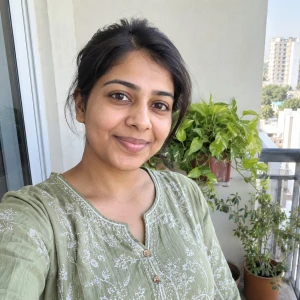
Spend a single evening pushing the same portrait through this year's biggest AI photo tools and one thing lands quickly: 2026 is not about smoothing skin anymore. The image that gets saved and reshared now is weirder, messier, and far more personal than the glossy filters of two years ago. A clean figurine shot can take thirty-odd tries before the hands stop warping. A believable fake film photo can fail for the opposite reason, because the model keeps rendering it too crisp.
That friction is the whole point of this guide. Below are seven AI photo trends genuinely moving across TikTok, Instagram, and Pinterest, each with a plain-language recipe, the tool that handles it best, and the specific flaw to expect. No theory, just what gets a usable image out the other side.
By the numbers
|
Industry roundups peg the AI photo-editing market as growing roughly 42% a year toward about $2.1 billion, with TikTok AI transformation videos pulling in around 240% more views than in 2025 and "digital scrapbook" searches on Pinterest up roughly 340%. The same tracking ranks the relative pull of each format: toy-ification around +400%, Y2K camcorder about +300%, cinematic time travel near +250%, pet-to-human close to +200%, and anti-AI film grain around +150%.
The engines doing the heavy lifting
Most of these looks run on two families of model, and knowing which tier you are on saves a lot of wasted generations.
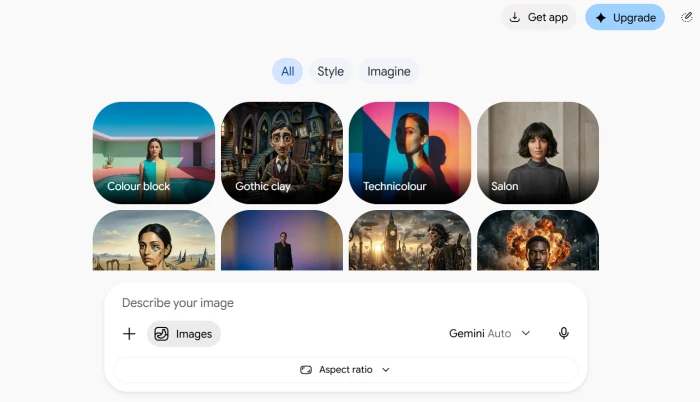
Nano Banana (Google Gemini). Nano Banana is Google's Gemini image model, which began as Gemini 2.5 Flash Image in August 2025, followed by Nano Banana Pro (Gemini 3 Pro Image) in November 2025 and Nano Banana 2 in early 2026. The Pro tier matters for anything with lettering: it was built on Gemini 3 Pro with a thinking step, supports up to 14 reference images and Google Search grounding, and renders text far better than the flash tiers. The newest flash release carries strong subject consistency too, holding up to five characters and the fidelity of up to fourteen objects across a single workflow. Google's own team has described the model's reach plainly, noting it took users from restoring old photos to generating mini figurines.
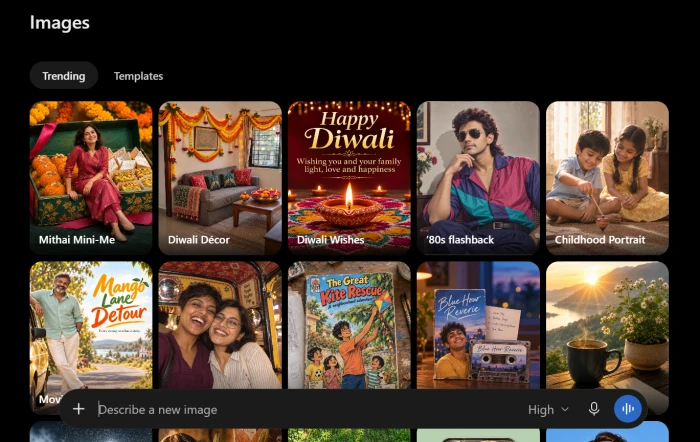
GPT Image (ChatGPT). OpenAI's current engine stepped up this spring: GPT Image 2 shipped in April 2026, succeeding the gpt-image-1 model from April 2025. It is the usual pick for yearbook grids and poster text when you are already inside ChatGPT.
One detail worth holding onto before you post anything: every Google image carries a hidden tag. All images generated through Nano Banana include SynthID, a digital watermark that stays detectable even after cropping or compression, and on free and lower tiers Google also keeps a visible Gemini sparkle watermark to make the image easy to spot as AI-generated. More on what that means for disclosure further down.
1.Toy-ification (the boxed collectible)
The year's runaway format. You, rendered as a 1/7-scale action figure sealed in retail packaging: blister pack, cardboard backer, a couple of accessories, and a brand-style logo across the top.
What separates a 2026 version from last year's is the finish. Unlike the hyper-glossy action-figure edits of late 2025, this year's toy look favors matte-soft surfaces, delicate hand-painted blush, and oversized 3:1 head-to-body proportions, finished with acrylic display stands, subtle manufacturing seams, and gallery lighting.
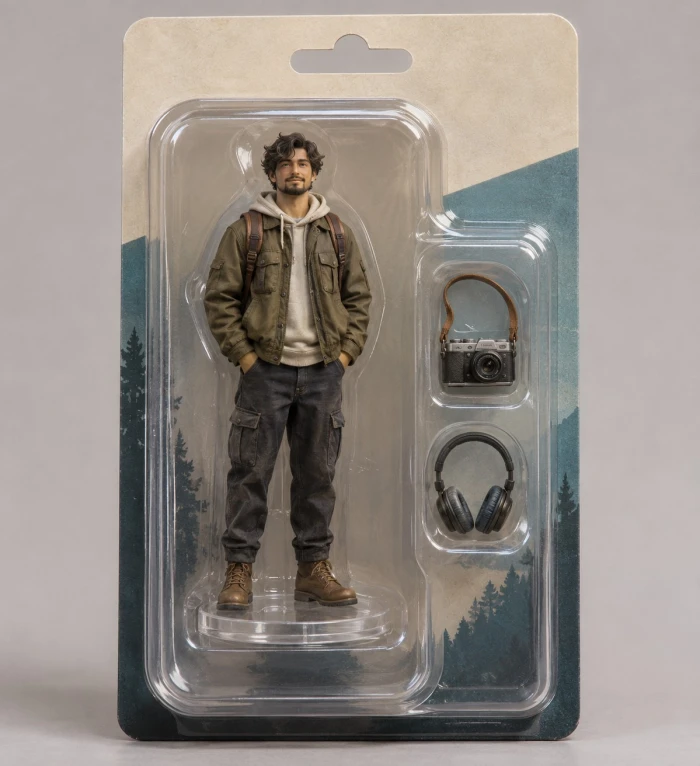
Recreate it: Upload one clear, well-lit photo, ideally chest-up or full-body against a plain background. Prompt: "1/7 scale collectible figure of the person in the photo, sealed in a blister pack with printed cardboard backing, small accessories beside the figure, soft matte paint finish with hand-painted detail, visible mold seam lines, acrylic base, studio product lighting, product name printed across the top of the box." Best engine: Nano Banana 2 or Nano Banana Pro. Use Pro when the box text has to be legible. Watch for: Hands and tiny accessories warp first, and faces drift when the reference is low-resolution. Flash-tier models also garble the packaging lettering, so step up a tier whenever the printed name matters. |
2.Y2K camcorder and flip-phone flash
A hard swing against polish. The photo gets degraded on purpose to look like a 2003 point-and-shoot or an early flip-phone front camera. Camcorder overlays, timestamp graphics, CRT distortion, and low-resolution flash photography are everywhere in 2026, and the appeal is that a convincing version reads as a candid snapshot rather than an AI render.
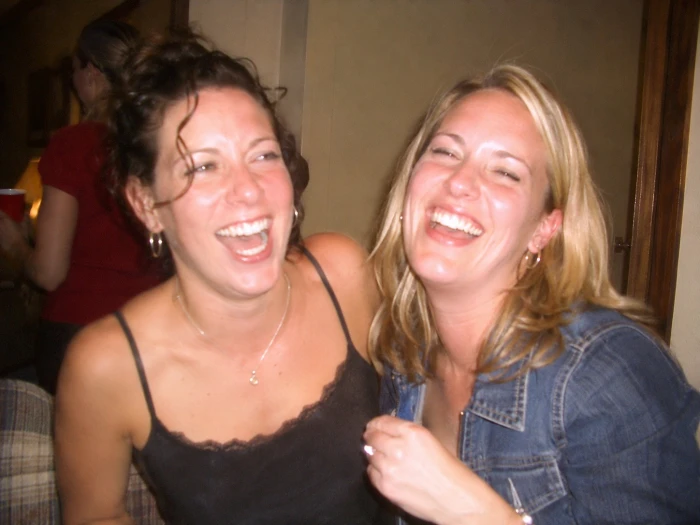
Recreate it: Start from a normal selfie. Prompt: "early-2000s 0.3-megapixel digital camera photo, direct on-camera flash, slight motion blur, heavy JPEG compression, warm yellow-orange indoor white balance, low dynamic range, timestamp in the bottom corner." Add a touch of grain at the end. Best engine: Either family handles it; this is prompt-driven, not tier-dependent. Watch for: Models over-sharpen by default. If the result looks too clean, push harder on "lower resolution, visible compression, blown-out flash." Strip out any modern background cues like current phones or logos, which break the illusion instantly. |
3.Anti-AI film grain (imperfect by design)
The quiet contrarian of the group, and in some ways the hardest. The goal is to make an AI image look like it was never touched by AI. After years of AI images being known for smooth skin, flawless lighting, and unreal clarity, creators in 2026 are deliberately doing the opposite, aiming for a result that reads as an old 35mm film photograph rather than AI art.
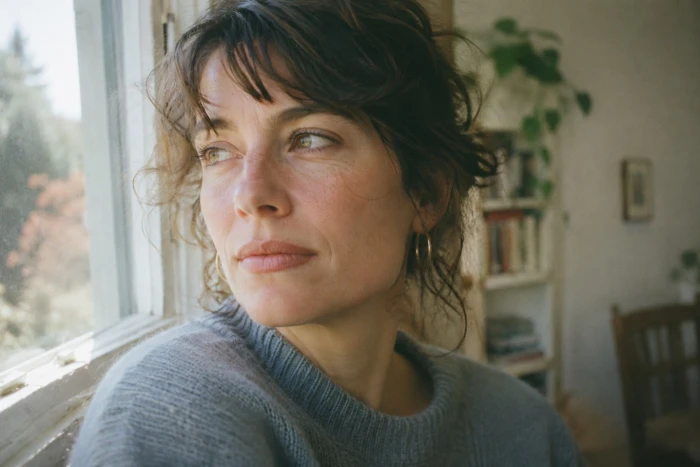
Recreate it: Prompt: "shot on 35mm film, Kodak Portra 400, visible film grain, natural skin texture with pores and fine lines, slightly uneven window light, minor lens softness toward the edges, no retouching, candid framing." Optionally downscale the output and re-add grain so it is baked in, not layered on. Best engine: Nano Banana 2 or GPT Image 2 for realistic skin texture. Watch for: Two traps. Over-grain tips the whole thing back into "filter" territory, so keep it subtle. And the look does not actually hide the AI underneath: the SynthID watermark is still embedded even when the photo reads as filmic, so treat this as a style, not a cloak. |
4.Cinematic movie poster
Your selfie as a theatrical one-sheet: a stylized title, a tagline, dramatic key art, and a tiny credit block along the bottom. This one only became dependable recently for a technical reason. It stayed reliable through 2026 rather than fading because models learned to render legible text and coherent cinematography in a single pass.
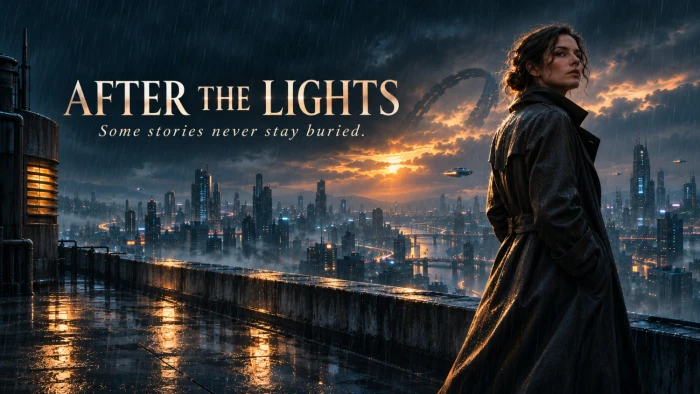
Recreate it: Prompt: "theatrical movie poster, [genre] film, the person as the lead, dramatic key lighting, large stylized title at the top reading 'YOUR TITLE', short tagline beneath it, small condensed credit block along the bottom, 27x40 poster proportions." Always put the exact title text in quotes. Best engine: Nano Banana Pro for text accuracy, with GPT Image 2 a close second. Watch for: Cheaper tiers still mangle long credit blocks and small type. Keep the title short, spell-check the output, and reserve the Pro tier for anything word-heavy. |
5.Meeting your past self
One of the year's most emotional formats, built from two photos instead of one. Creators upload a childhood photo and a current photo, and the AI generates an image of the adult embracing their younger version, which tends to go viral because it pairs visual storytelling with personal reflection.
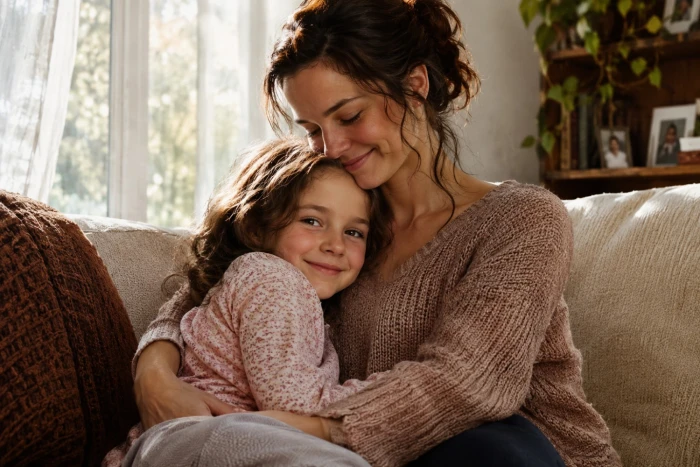
Recreate it: Upload both references at the highest quality you have. Prompt: "the adult from the first image and the child from the second image together in a warm, softly lit room, the adult gently hugging the child, matching film-like color grade, natural expressions, both faces clearly resembling the reference photos." Best engine: Nano Banana 2, which holds multiple faces consistent across a single image. Watch for: The child's face is the first thing to slip. If either reference is grainy or small, the resemblance fades, so keep lighting and grade consistent between the two source photos. |
6.AI Polaroid (the impossible snapshot)
A faded instant-film photo that looks decades old, usually placing two people in one candid flash shot inside a white Polaroid border. These imagined-memory Polaroids bring two separate subjects into a single old-looking photo, which is exactly the hook: a picture that could never have been taken.
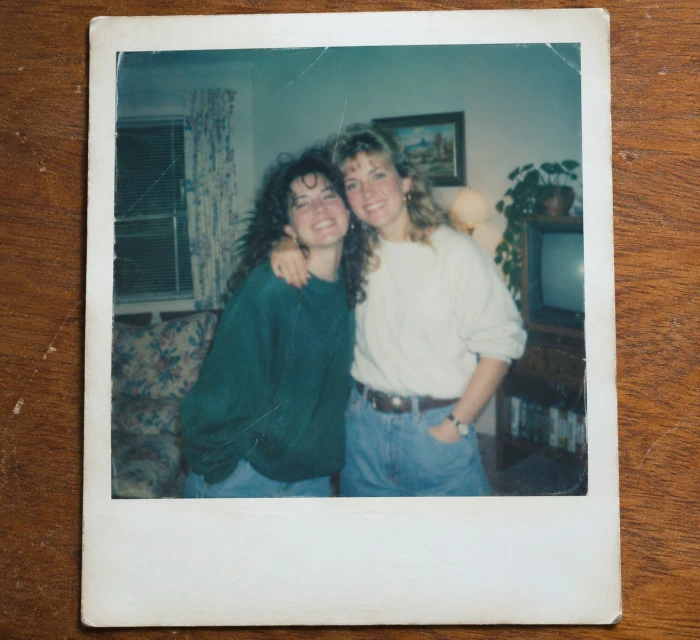
Recreate it: Provide both face references. Prompt: "vintage Polaroid instant photo with a thick white border, slight color fade and cyan shift, direct on-camera flash, two people standing close and smiling, soft focus, 1990s indoor setting, faint surface scratches." Best engine: Nano Banana or GPT Image 2. Watch for: This is the format most likely to cross an ethical line. Dropping a real public figure, or a late relative, into a fabricated candid raises consent and misinformation concerns. Label it clearly as AI and never present it as a genuine photograph. |
7.AI yearbook and decade portraits
The steady earner. Your selfie restyled as throwback school portraits: feathered hair, a mottled studio backdrop, soft gradient lighting, and the muted color grade of a mall photo booth, often extended into full "decade change" sets. It keeps coming back for a reason. The yearbook format has the largest steady search interest of the viral group, resurfacing repeatedly because everyone carries a yearbook reference in their head and a believable fake is funnier than any real one.
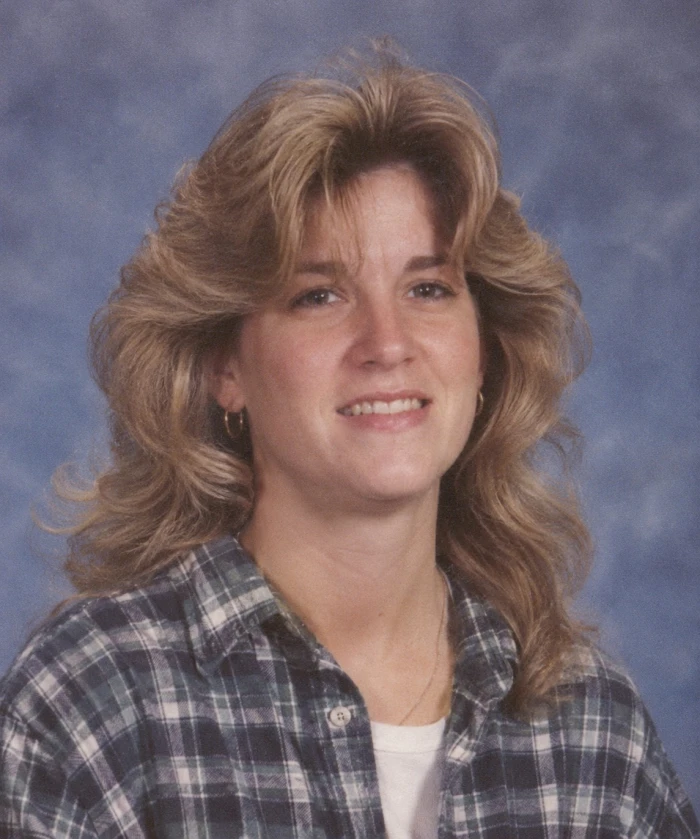
Recreate it: Prompt: "1998 high school yearbook portrait, mottled blue studio backdrop, soft portrait lighting, feathered hairstyle, period-correct clothing, slightly faded print with fine grain, shoulders-up framing." Generate four to six for a grid. Best engine: GPT Image 2 presets or Nano Banana. Watch for: Wardrobe and hair anachronisms creep in, and weak references produce a generic "90s person" instead of you. Lock the exact year in the prompt and name the era details you want. |
Quick comparison
| Trend | Difficulty | Best engine | Where it lands |
|---|---|---|---|
| Toy-ification | Moderate | Nano Banana 2 / Pro | TikTok, Pinterest |
| Y2K camcorder | Easy | Either | TikTok, Instagram |
| Anti-AI film grain | Fiddly | Nano Banana 2 / GPT Image 2 | Instagram, X |
| Movie poster | Moderate | Nano Banana Pro | Instagram, X |
| Meeting past self | Fiddly | Nano Banana 2 | TikTok, Instagram |
| AI Polaroid | Easy | Either | Instagram, Pinterest |
| AI yearbook | Easy | GPT Image 2 / Nano Banana | TikTok, Instagram |
How to kill the AI giveaways
Most "obviously AI" results fail on the same handful of details. Fixing them is faster than regenerating blindly.
- Hands and fingers. The most reliable tell. Crop them out, tuck them into pockets, or hold a prop that hides the knuckles.
- Text and logos. Small lettering smears on fast tiers. Keep words short, check spelling pixel by pixel, and move to a Pro or 2-tier model for posters and packaging.
- Over-smooth skin. Add grain, pores, and uneven light. Perfect skin is the single biggest flag on a "real" photo.
- Dead symmetry. Real photos are a little off. Ask for a slightly tilted frame, off-center subject, or imperfect lighting.
- Reference quality in, resemblance out. A sharp, well-lit source photo does more for likeness than any prompt tweak. Low-resolution references are why faces drift.
A note on disclosureMaking these is fun. Posting them without thought is where people get into trouble. Google embeds a SynthID watermark in every Nano Banana image, and it survives cropping and compression, so the "anti-AI" film look does not actually scrub the AI signal underneath. That watermarking is now broad: SynthID had marked over 100 billion items by May 2026 and extended to other vendors as a cross-vendor standard, with consumer-facing yes/no detection built into the Gemini app. Platforms are reading these signals, and audiences increasingly expect a label. Two habits keep things clean: tag AI edits as AI, and do not put real people, especially private individuals or the deceased, into fabricated photos without consent. The formats that age well are the ones that never pretended to be real in the first place. |
Final verdict
After enough back-to-back generations to lose track of the count, a clear pattern holds: picking the right engine for the job beats chasing the perfect prompt. Toy figurines and anything with lettering belong on Nano Banana Pro or a 2-tier model, where text actually renders and seams look molded instead of painted on. The nostalgia looks, camcorder shots, Polaroids, and yearbooks, barely care which tool you use and come down almost entirely to how specific the prompt is about the era. The two-reference trends, meeting your past self and the impossible Polaroid, are the ones worth slowing down for, because resemblance lives or dies on the quality of the photos going in, not the words around them. None of the seven is hard to start. The gap between a first attempt and a shareable one is just knowing which detail breaks, and now you do. The tools will shuffle again within weeks, but the instincts here, protect the hands, respect the text, keep the references sharp, and label what you make, carry over to whatever lands next. |
Join the discussion